
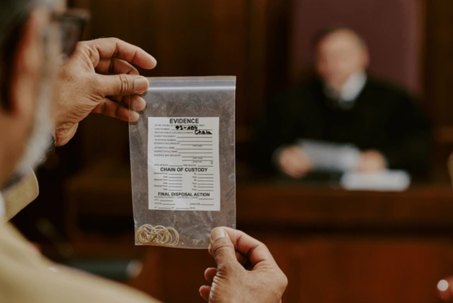
The prosecutor says they have the police reports, video, and test results, and it feels like your case is already lost. You might be picturing a stack of papers and hard drives that prove everything they are saying. In that moment, it can seem like there is no point fighting because all that “evidence” will end up in front of a jury no matter what you do.
In real Lincoln criminal cases, what the police collect and what a jury actually sees are two very different things. Nebraska’s rules of evidence, and the way judges in Lancaster County apply them, control what comes in and what stays out. Once you understand that, the situation feels less like a tidal wave and more like a series of specific questions that can be challenged and tested.
At Dowding, Dowding, & Dowding, our attorneys have spent decades in Lincoln and Grand Island courtrooms reviewing body camera footage, lab reports, and witness statements and arguing about what the jury should be allowed to hear. With over 100 years of combined legal experience, we have seen how a single ruling on evidence can completely change the strength of a case. In this guide, we want to share how evidence rules really work in Lincoln and how they might affect your case.
Why Evidence Rules Matter So Much In Lincoln Criminal Cases
Many people think that once the police have something in a file, the prosecutor simply shows it to the jury. Nebraska courts treat evidence like a gatekeeping process, not a free-for-all. In Lincoln’s county and district courts, judges apply the Nebraska rules of evidence to decide what the jury can hear, see, and consider when they decide guilt or innocence.
When lawyers talk about “admissible” evidence, they mean information the judge allows into the trial. “Inadmissible” evidence stays out, often because it was collected illegally, is too unreliable, or would unfairly inflame the jury. That decision can mean the difference between a jury watching a video or never seeing it at all. It can also affect what questions prosecutors are allowed to ask witnesses on the stand.
Take a simple example. A driver is stopped on O Street in Lincoln and officers find drugs in the vehicle after a search. The police may write reports, take photos, record body camera footage, and send the substance to the lab. None of that is guaranteed to be admissible. If the stop was not legally justified or the search went beyond what the law allows, a judge could suppress the drugs and any statements that followed. Without that evidence, the entire case may look very different to the prosecutor and the court.
Over more than a century of combined practice, we have watched evidence rulings in Lincoln reshape cases in ways clients did not expect. Some rulings strengthen the state’s hand, and some remove critical pieces of their puzzle. When we review a new case, one of the first questions we ask is not “what evidence do they have” but “what evidence can they actually use under Nebraska’s rules.”
What Counts As Evidence In A Lincoln Criminal Case
When you hear that the prosecutor has “evidence,” it helps to know exactly what that word covers. In Lincoln criminal cases, evidence includes anything the state might offer in court to prove or disprove a fact, as long as it meets the rules. That can be testimony from officers, physical items, documents, recordings, or digital data pulled from phones and computers.
Common types of evidence in local cases include officer testimony about what they saw and heard, body camera and dash camera footage from Lincoln Police Department or the Lancaster County Sheriff’s Office, and lab reports for breath or blood alcohol tests in DUI cases. In drug cases, prosecutors often rely on lab analysis of seized substances and photos of items collected in a vehicle or home. In assaults or domestic cases, you may see text messages, social media messages, and 911 call recordings presented as evidence.
Some of this evidence is direct, which means it points straight at a fact. An officer saying “I saw the defendant driving the car” is direct evidence of who was driving. Circumstantial evidence suggests a fact indirectly. For example, finding your wallet in the driver’s seat of a crashed car on Cornhusker Highway is circumstantial evidence that you were driving. Many people think circumstantial evidence is weak or does not count, but Nebraska courts tell juries that both types can be powerful if they believe the source is reliable.
There is also character evidence, which has its own set of limits. Prosecutors are not free to pile on every mistake or allegation from your past. Nebraska rules restrict when they can talk about prior convictions, bad acts, or reputation, because that kind of information can easily push a jury to decide based on character instead of the specific charges. Knowing where those limits sit is crucial when we evaluate a client’s history against a new case.
When we sit down with clients in Lincoln or Grand Island, we go through the discovery packet piece by piece and explain what each item can really prove. A stack of reports looks intimidating, but once you know which parts are direct, which are circumstantial, and which might never reach the jury, you gain a clearer view of your actual risk and options.
How Judges In Lincoln Decide If Evidence Is Admissible
Judges in Lincoln do not simply ask whether a piece of evidence feels important. They use key concepts like relevance and unfair prejudice to decide whether it belongs in front of a jury. Evidence is considered relevant if it makes a fact in the case more or less likely. Even relevant evidence can be excluded if its value is outweighed by the risk it will confuse or unfairly inflame the jury.
For example, suppose a defendant is on trial for a bar fight that happened downtown. The prosecutor might want to introduce photos of old injuries from a completely different incident just to make the defendant look dangerous. Those photos could be technically relevant, but a judge in Lancaster County might find that their unfair prejudice outweighs their value and keep them away from the jury. That kind of balancing decision happens regularly in criminal trials.
Many of these battles play out before trial through written motions and hearings. A motion to suppress asks the judge to exclude evidence because it was obtained in violation of constitutional rights. A motion in limine asks the judge to set limits on how certain evidence can be used, such as keeping out inflammatory wording or prior incidents. In Lincoln, these hearings are often where the real shape of a case emerges, long before a jury is ever seated.
Other rulings happen in real time at trial. When a lawyer believes a question or answer violates the rules, they object. The judge then decides on the spot whether to allow it. Those moments may seem quick from the gallery, but they rely on years of familiarity with the rules and the judge’s expectations. Clear, timely objections also preserve issues for appeal, which can matter if the case does not go your way.
Our award-winning trial attorneys have spent countless hours arguing evidentiary motions before Lincoln judges. Because we have practiced in these courts since 1993, we understand how local judges generally weigh relevance and prejudice and how they prefer issues to be presented. That familiarity helps us tailor our arguments so your side of the story is heard in the most persuasive way possible.
Challenging How Police Collected Evidence In Lincoln
When clients come to us, they often ask whether anything can be done if the police did not follow the rules. Under Nebraska and federal law, officers in Lincoln are limited in how they can stop, search, and question people. If those limits are crossed, evidence can sometimes be suppressed, which means the prosecutor cannot use it at trial.
One common issue involves traffic stops. Imagine you are pulled over on O Street because an officer claims you “looked suspicious,” but there was no specific traffic violation or clearly stated reason. If the stop was not supported by reasonable suspicion, anything found later, such as drugs in the car, could be challenged. A motion to suppress might argue that the entire chain of events flowed from an illegal stop, and a judge could exclude the drugs and any incriminating statements that followed.
Searches of vehicles and homes raise similar concerns. Officers sometimes search a car based on so-called consent, but body camera footage may show a driver felt cornered or never clearly agreed. In other cases, search warrants for Lincoln apartments or houses might be based on weak or outdated information. When we review a case, we compare police reports with video, audio, and any available witness accounts to see whether the search truly met constitutional standards.
Questioning can also create problems. If officers interrogate someone in custody without reading Miranda rights, or they ignore a clear request for a lawyer, statements made after that point may be subject to suppression. We work with clients to reconstruct exactly what was said and when, using recordings whenever possible, because these details often decide whether a confession or damaging remark stays in the case.
Our firm’s legacy of justice and family history are more than slogans for us. They shape how we approach police conduct and search tactics. We do not simply assume the reports are accurate or that officers followed the rules. Instead, we dig into the details, file motions when the facts support them, and argue for suppression where the law and evidence justify that step.
Hearsay, Witness Testimony, And What Juries Actually Hear
Hearsay is one of the most misunderstood parts of evidence law. In simple terms, hearsay is an out-of-court statement that someone offers in court to prove what the statement says. Courts are cautious with hearsay because the person who actually made the statement is not on the stand to be questioned about what they said and why they said it.
Consider a common scenario in a Lincoln assault case. A friend tells police, “My neighbor said he saw the defendant throw the first punch.” If the neighbor does not testify, the friend is simply repeating what someone else said. That is classic hearsay. The defense can object if the prosecutor tries to use that secondhand statement to prove who started the fight, and the judge may keep it away from the jury.
There are, however, exceptions that often come up in local cases. Statements made in the heat of the moment during a 911 call, for instance, can sometimes be admitted as excited utterances. Statements made for medical diagnosis or treatment may also come in even though they are hearsay. These exceptions have detailed rules, and prosecutors sometimes rely on them when a witness does not want to testify or cannot be found.
Jury trials in Lancaster County often turn on what witnesses can and cannot say. A witness who sticks to what they saw and heard firsthand is usually on solid ground. Once they start repeating what others told them, hearsay objections become important. Skilled questioning can also expose when a witness has mixed personal observations with rumor or assumption, which can weaken the state’s case.
With more than 100 years of combined courtroom experience, our attorneys know how to press these issues. We prepare carefully for cross-examination, challenge unreliable secondhand statements, and make timely objections so the record is clear. Even when a judge allows a statement under an exception, we work to show the jury why it may not be as trustworthy as it sounds on paper.
Chain Of Custody And Reliability Of Physical And Digital Evidence
Physical and digital evidence only has value if the court can trust that it is what the state claims it is and that it has not been altered. Chain of custody is the term for the documented path an item takes from collection through storage and testing to the courtroom. Breaks in that chain can raise real questions about reliability and, in some cases, lead to exclusion or reduced weight in the jury’s eyes.
In Lincoln drug cases, for example, officers seize substances during a traffic stop or search and then submit them to a lab. Each person who handles the evidence is supposed to log their actions, from initial collection to storage, transport, testing, and return. If records are incomplete or inconsistent, or if packaging appears tampered with, it gives us room to question whether the lab actually tested the same material the officer seized.
Weapons and clothing present similar issues. A firearm found in a vehicle might pass through several hands before trial. If the serial number, description, or location notes change between reports, that inconsistency can open the door to reasonable doubt. Evidence stored for months in crowded property rooms may raise questions about contamination or mix-ups, especially when biological or trace evidence is involved.
Digital evidence adds another layer of complexity. Phone records, text messages, social media screenshots, and surveillance footage from Lincoln businesses can be powerful, but they are also vulnerable to editing and misinterpretation. We pay close attention to how digital evidence was extracted, preserved, and authenticated. Missing logs, partial conversations, or unexplained gaps in video can all undermine the story the prosecution wants to tell.
Our firm thrives on tackling these complex evidence questions through collaborative strategies. We often work together as a team to walk through the chain of custody and, when appropriate, consult with outside professionals to understand how testing or data extraction was done. That detailed review can reveal weak links that are easy to miss but important for your defense.
How A Defense Lawyer In Lincoln Builds An Evidence Strategy
From the outside, it can look like lawyers simply show up in court and argue. In reality, building an evidence strategy in a Lincoln criminal case is a detailed process that starts well before any hearing. Once we are hired, we request all available discovery and begin organizing it into categories so we can see the complete picture and where the pressure points might be.
We review police reports, body and dash camera footage, 911 calls, lab reports, photos, and any digital records the state plans to use. Then we compare these items against each other and against your account of what happened. Inconsistencies between a report and the video, gaps in the chain of custody, or unclear consent for a search all become potential grounds for motions or strategic objections.
After this review, we sit down with you and walk through what we have found. We do not simply tell you what we think should happen. Instead, we explain which pieces of evidence are likely admissible, which we believe are vulnerable to challenge, and what the realistic chances are of success on any suppression motions. We also discuss how different evidence scenarios would affect plea discussions and the risks and benefits of going to trial.
Timing matters. Many evidentiary motions must be filed before deadlines set by Lancaster County courts. The earlier we become involved, the more time we have to investigate, request missing materials, and prepare detailed motions. Early action can also help us preserve favorable evidence, such as surveillance footage from Lincoln businesses that might otherwise be overwritten or witnesses whose memories fade quickly.
Our personalized, client-centered approach means we keep you informed through each step of this process. We know these decisions affect your life, not just your case. Open communication about evidence strength, procedural options, and likely outcomes is part of the way we have practiced since 1993, and it is a key reason many people in Lincoln and Grand Island turn to us when facing serious charges.
What You Can Do Now If You Are Worried About The Evidence
If you are already anxious about the evidence in your case, you are not alone. One of the most helpful things you can do right now is avoid making the situation worse. That means not posting about the case on social media, not discussing details with friends or co-workers, and not trying to explain things directly to officers or prosecutors without a lawyer present. Those conversations and posts can easily become new evidence.
It is also useful to gather any documents you have, such as citations, charging documents, property receipts, and paperwork from Lincoln police or Lancaster County courts. These materials help us quickly identify what charges you face, who the key officers are, and what evidence may already be logged. If you were given any business cards or contact information for detectives or witnesses, keep those together as well.
When you meet with us, we can focus the initial consultation on the evidence picture. We will ask you what you remember about how you were stopped, searched, or questioned and compare that to what appears in the reports. From there, we can start identifying immediate concerns about admissibility, chain of custody, and witness testimony that might need fast attention. Even if your case feels overwhelming now, a structured review can reveal more options than you expect.
As a firm deeply connected to the Lincoln and Grand Island communities, we understand how heavy it feels to have your future rest on files you have never seen and rules you have never heard of. Our role is to bring clarity to that process, explain how evidence rules apply to your situation, and stand beside you as decisions are made that can affect the rest of your life.
Talk With A Lincoln Defense Team About The Evidence In Your Case
Evidence rules in Lincoln’s criminal courts are not just technicalities on paper. They are the framework that decides which parts of the state’s story the jury hears and which parts never leave the file. When we apply those rules carefully and early, they can open doors to negotiations, reshape trial strategy, and sometimes remove the most damaging pieces of the case.
You do not have to guess how these rules apply to you or face the prosecutor’s evidence alone. If you have questions about what the state says it has and what a judge might actually allow, we invite you to sit down with our team at Dowding, Dowding, & Dowding for a focused review. We will walk through the evidence, explain your options, and help you make informed decisions about your next steps.
Call (308) 300-4172 to talk with a Lincoln criminal defense attorney about the evidence in your case.